Loftus AI
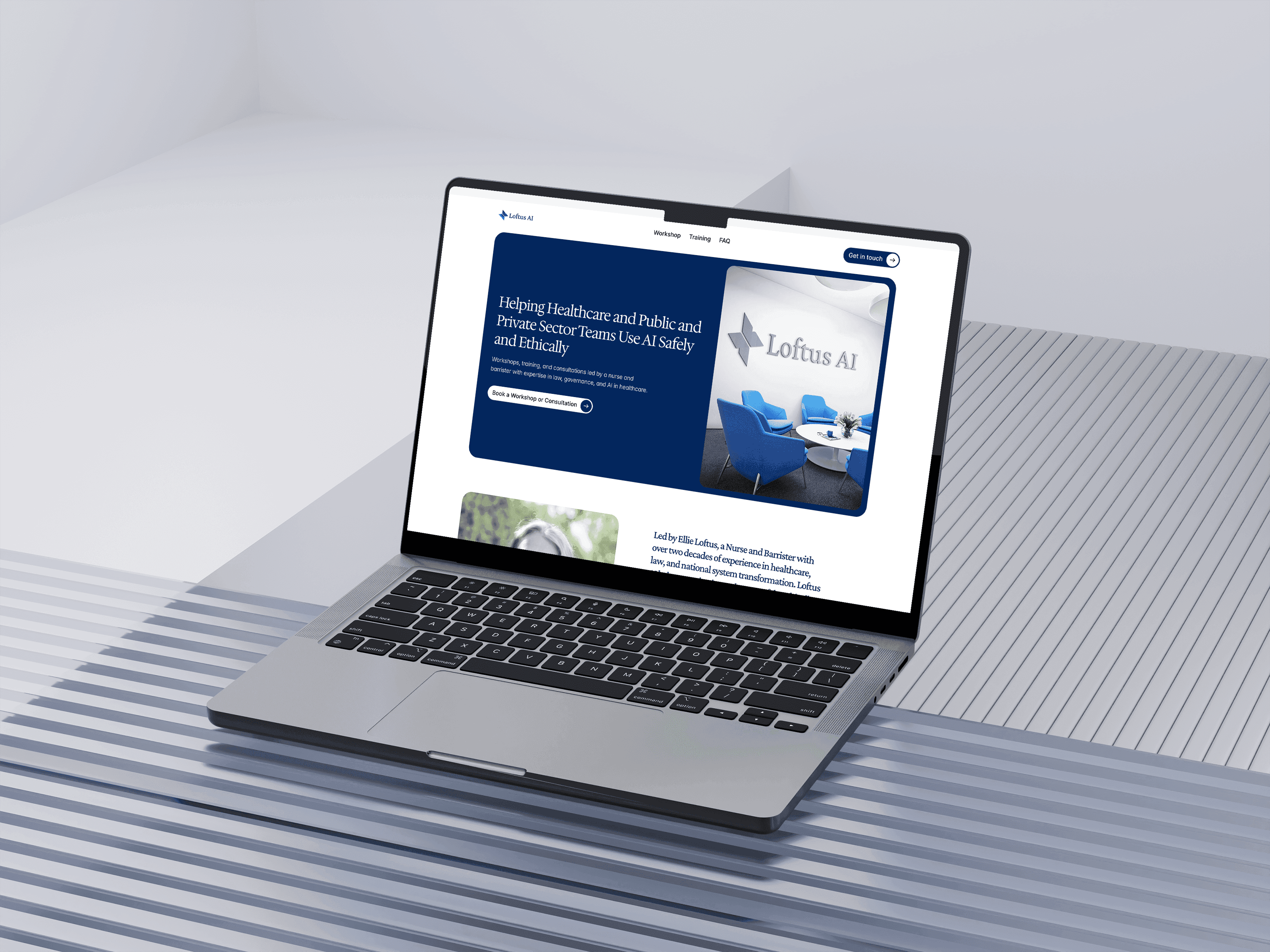
Loftus AI is a single-page, anchor-based website designed to support healthcare and public sector organisations in adopting AI safely, ethically, and in full regulatory compliance. The platform presents leadership workshops, clinical training, consultations, and governance guidance within a structured and credibility-driven digital experience. The objective was to create a calm, authoritative online presence that reflects the founder’s dual expertise in healthcare and law while maintaining clarity and accessibility across complex subject matter.
Client
Loftus AI
Category
UI/UX DESIGN
Services
Year
2025

Problem
Communicating AI Governance Without Hype
AI advisory websites often fall into two extremes: overly technical jargon or exaggerated innovation messaging. Loftus AI required a different tone. The brand needed to feel grounded, sector-aware, and legally informed rather than startup-driven or product-focused. The challenge was presenting AI risk, compliance, and governance frameworks in a way that decision-makers could immediately understand without oversimplifying the subject.
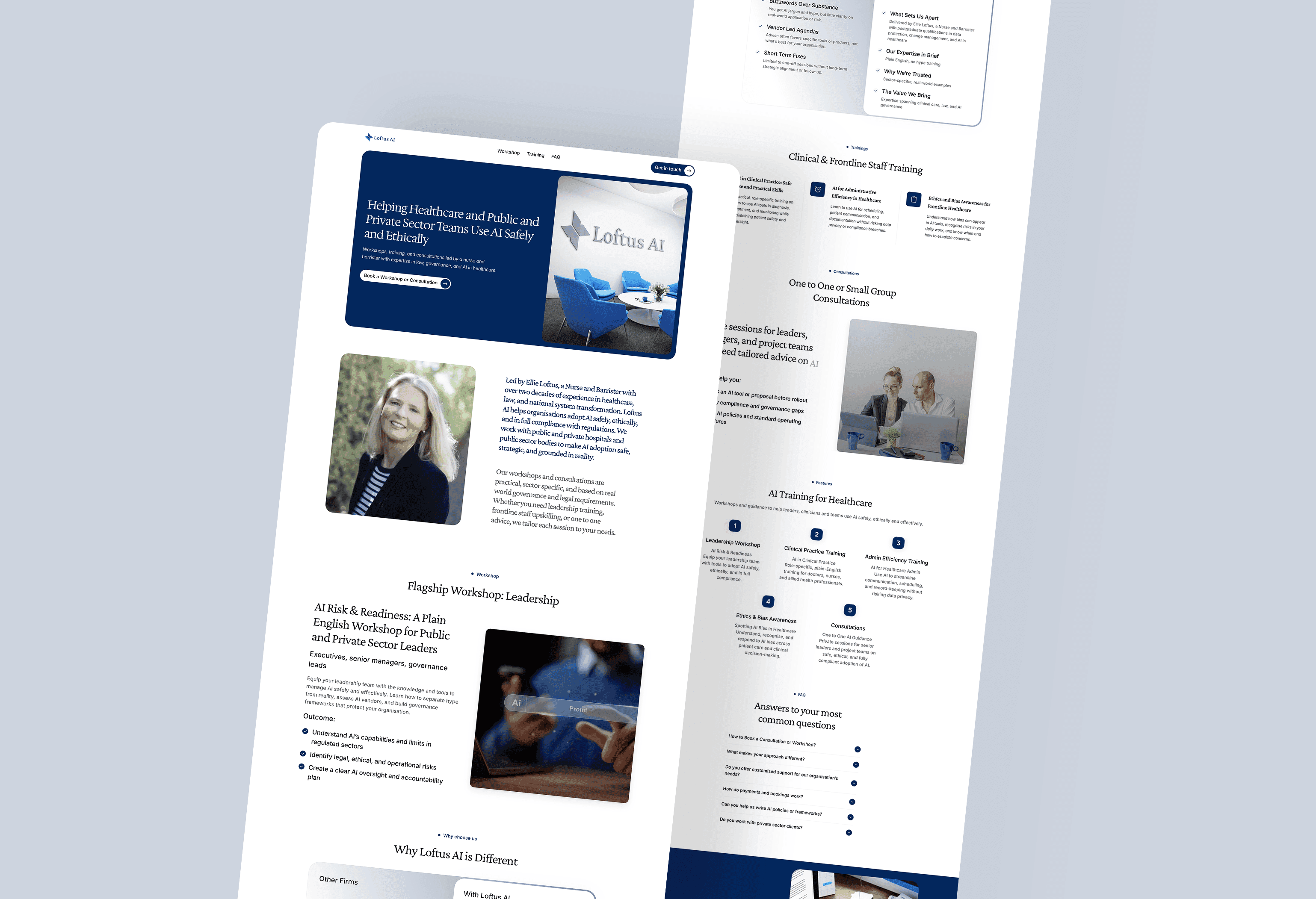
Complexity
Structuring a Full Offering Within a Single-Page Framework
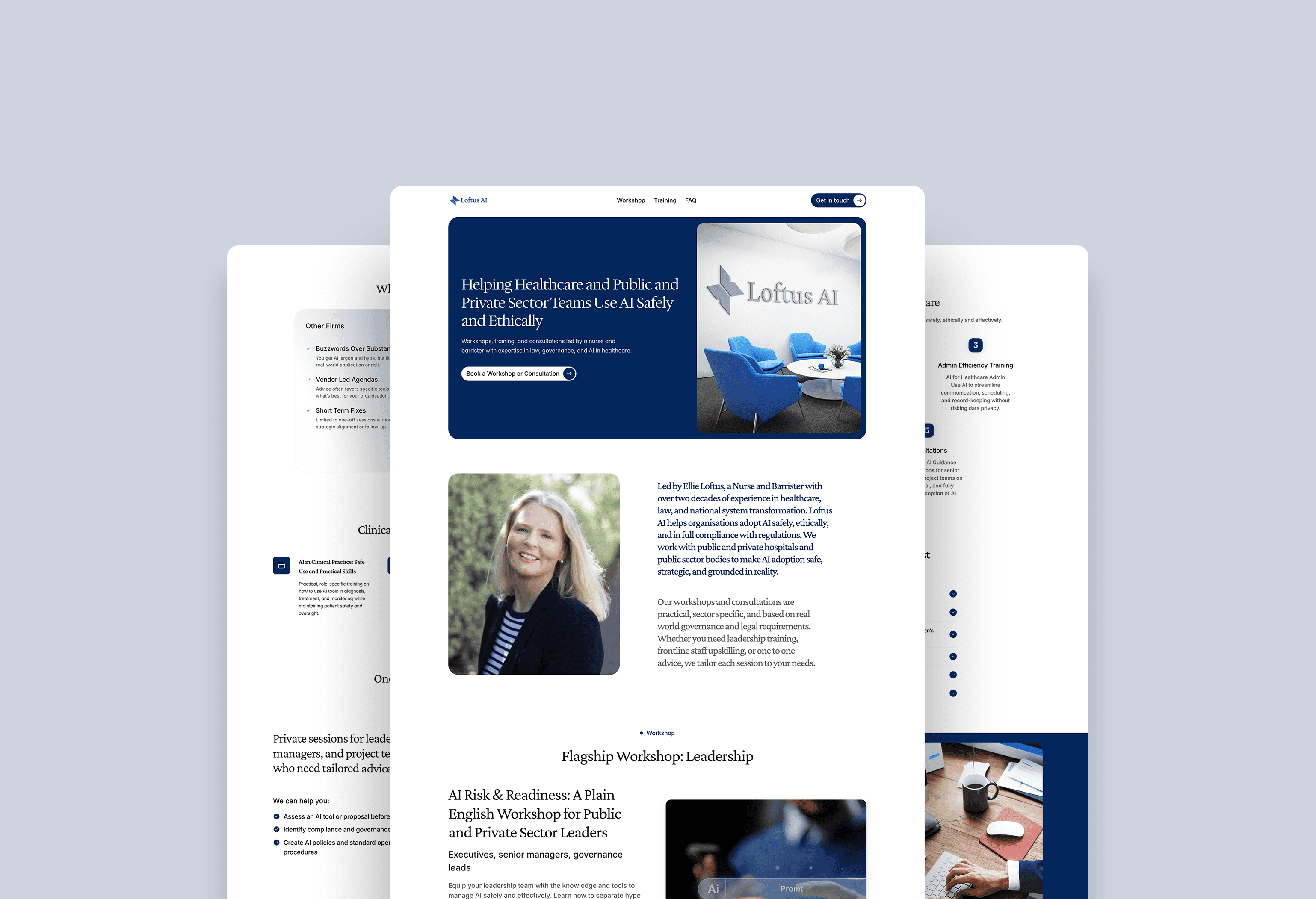
Unlike multi-page corporate websites, Loftus AI operates entirely on a single-page layout with anchored navigation. Every header item connects directly to a specific section, including Workshop, Training, Consultations, Features, FAQ, and Contact. This required precise content sequencing and visual separation. Each section needed strong identity and hierarchy while remaining cohesive within a continuous scroll experience. The design had to support both quick scanning and deeper reading without fragmenting the user journey.
Approach
Anchored Architecture With Clear Sectional Hierarchy
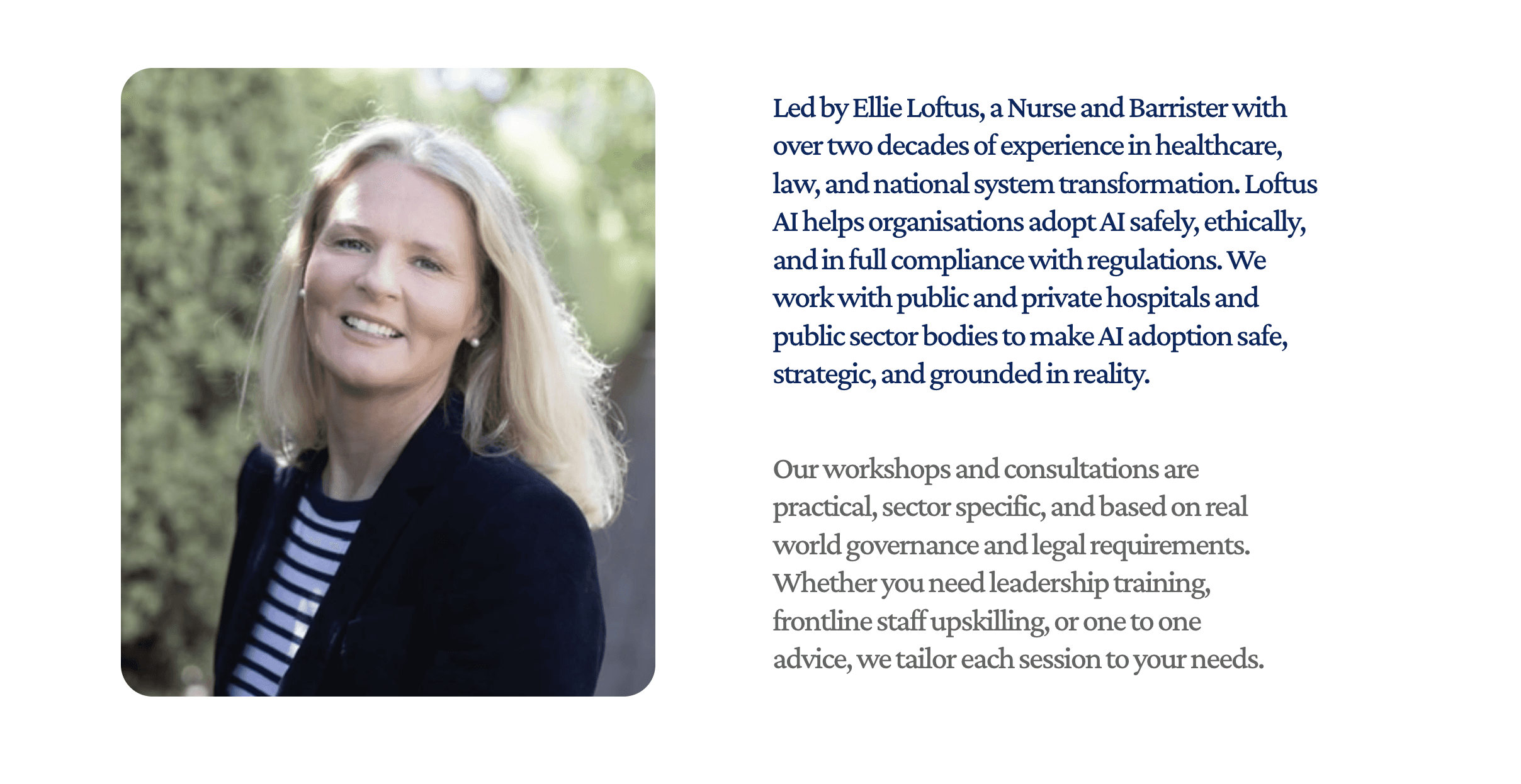
The site was structured into clearly defined content blocks aligned with the navigation anchors. The experience begins with a strong authority-driven hero section, followed by credibility positioning, workshop framing, structured training pathways, consultation offerings, and structured FAQs. Spacing, typographic hierarchy, and contrast were carefully managed to create calm progression between sections. Rather than using aggressive calls to action, the design encourages deliberate engagement through clarity and structured information.
System Architecture
Linear Flow With Flexible Navigation
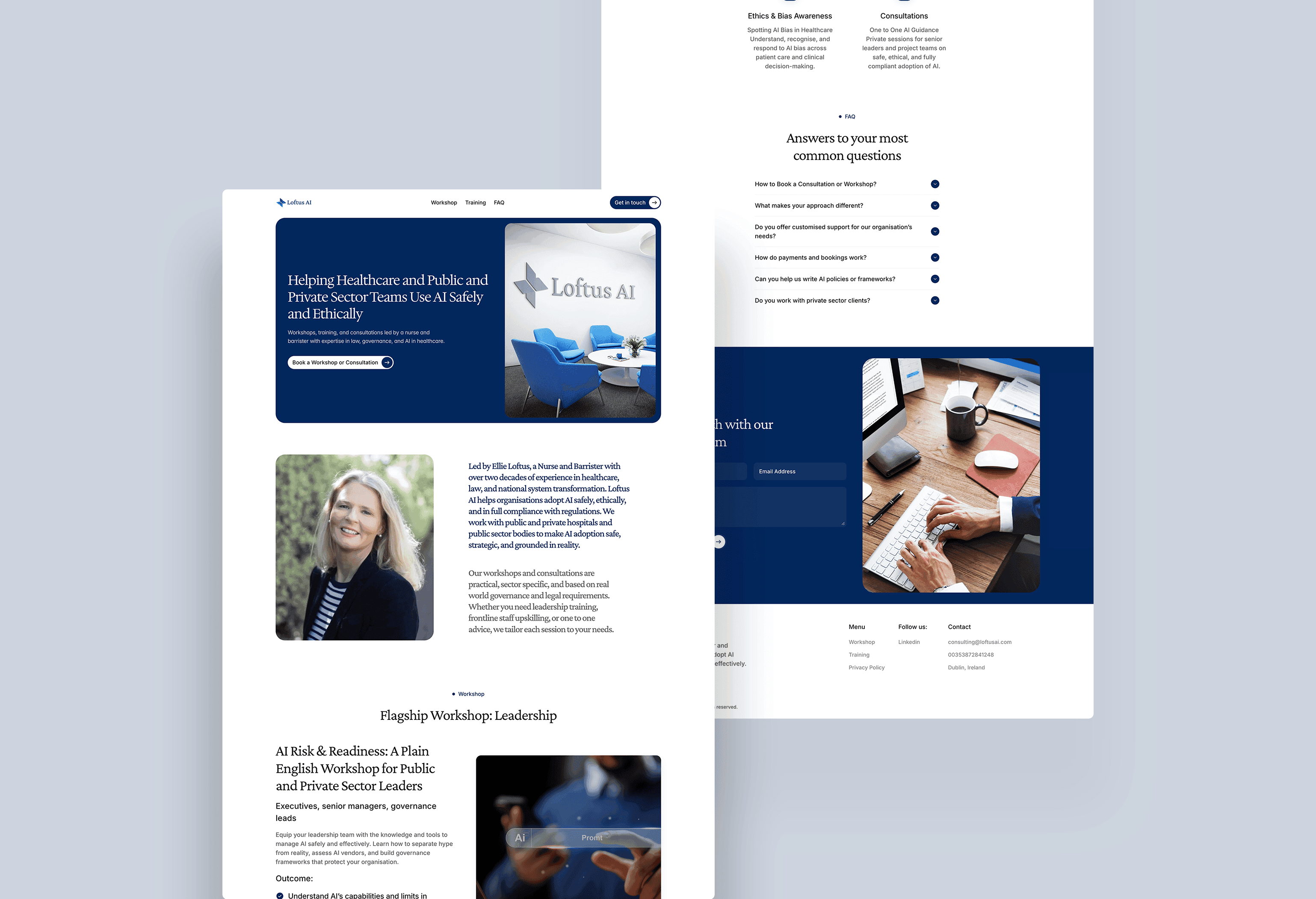
The anchored header enables users to move directly to relevant sections without leaving the page. This improves usability for executive visitors who often know exactly what they’re looking for. Each section functions as a self-contained module while contributing to an overall narrative: Authority → Differentiation → Structured Offerings → Practical Outcomes → Consultation. This architecture ensures both logical progression and navigational freedom.
Key Ux Decisions
Designing for Institutional Trust
The visual language uses deep blue tones, refined serif headings, and generous white space to reinforce professionalism. Imagery avoids abstract AI graphics and instead focuses on real environments and people, reinforcing practical expertise. Content framing emphasizes outcomes and governance alignment rather than technology features. Comparison framing in the “Why Loftus AI is Different” section builds credibility through contrast rather than claims. The FAQ section reduces friction by addressing booking, customization, and compliance concerns directly before users reach the contact section.
Outcome
A Focused, Credible AI Advisory Platform
The final result is a structured, trust-driven single-page website that communicates authority without intimidation. The anchored navigation enhances usability while maintaining narrative cohesion. Loftus AI now presents its workshops, training programs, and consultations within a calm and professional digital environment that aligns with healthcare and public sector expectations. The platform supports clearer engagement from leaders seeking responsible AI adoption rather than experimental implementation.